"Condemned to Joy: The Western Cult of Happiness is a Mirthless Enterprise" - Pascal Bruckner (City Journal)
- About the Author.
"We are not the masters of the sources of happiness; they ever elude the appointments we make with them, springing up when we least expect them and fleeing when we would hold them close."
31.3.11


22.3.11
Online Article:
"Lent and the Religion of Humanity" by James V. Schall, S.J. (The Catholic Thing)


"A web of evil seems to lock us into a despair about how to live a proper life, even when we finally acknowledge our own disorders. If, however, we accept the “religion of humanity,” we do not need to find a way out. We are doing what human beings “do.” This is humanity and its religion.
The public disorders we see – and our approval of them in one form or another in courts, legislatures, or media – reflect an unwillingness to question the theories behind our actions. Generally speaking, intellectual disorders, that is, wrong or bad ideas, do not reflect a lack of intelligence. Rather, they are efforts to justify our actions. We rationalize the habits of sin or disorder that we know require a different way of life."
17.3.11

24.2.11

18.2.11
New Proofs for the Existence of God; Contributions of Contemporary Physics and Philosophy - Robert J. Spitzer

15.2.11

10.2.11

17.1.11

16.1.11
The Historical Reliability of the Gospels -Craig L. Blomberg

- About the Author (Wikipedia)
- Authors Blog
- video lecture by Author; The Historical Jesus (Part 1/6)
- video lecture by Author: Debugging the DaVinci Code
- Interview with Author (Justin Taylor, Between Two Worlds)
- article: "Why I Believe the New Testament is Historically Reliable" by Gary Habermas (Apologetics.com)
15.1.11
The Shallows; What The Internet is Doing to Our Brains - Nicholas Carr
 - Buy this book.
- About the Author (Wikipedia)
- Authors Blog
- Article by Author: "Is Google Making Us Stupid?" (Atlantic)
- Wikipedia Page for "Is Google Making Us Stupid?"
- Article: "Scientific Study Indicates That Internet Addiction May Cause Brain Damage" (Time)
"The reading of a sequence of printed pages was valuable not just for the knowledge readers acquired from the author's words but from the way those words set off intellectual vibrations within their own minds. In the quiet spaces opened up by the prolonged, undistracted reading of a book, people made their own associations, drew their own inferences and analogies, fostered their own ideas. They thought deeply as they read deeply.
Even the earliest silent readers recognized the striking change in their consciousness that took place as they immersed themselves in the pages of a book. The medieval bishop Isaac of Syria described how, whenever he read to himself, "as in a dream, I enter a state when my sense and thoughts are concentrated. Then, when with prolonging of this silence the turmoil of memories is stilled in my heart, ceaseless waves of joy are sent me by inner thoughts, beyond expectation suddenly arising to delight my heart." Reading a book was a meditative act, but it didn't involve a clearing of the mind. It involved a filling, or replenishing, of the mind. Readers disengaged their attention from the outward flow of passing stimuli in order to engage it more deeply with an inward flow of words, ideas, and emotions. That was - and is - the essence of the unique mental process of deep reading. It was the technology of the book that made this "strange anomaly" in our psychological history possible. The brain of the book reader was more than a literate brain. It was a literary brain." (64-5)
13.1.11

The Roads to Modernity; The British,French, and American Enlightenments -Gertrude Himmelfarb

- About the Author.
- Review (The New Criterion)
- Review: Peter Berkowitz in Policy Review
- Review (Claremont Review of Books)
"The separation of church and state, however interpreted, did not signify the separation of church and society. On the contrary, religion was all the more rooted in society because it was not prescribed or established by the government. This is why, Tocqueville explained, religion and liberty coexisted and reinforced each other. And this is the meaning of one of his most profound paradoxes: "Religion, which among Americans, never mixes directly in the government of society, should therefore be considered as the first of their political institutions; for if it does not give them the taste for freedom, it singularly facilitates the use of it." Religion was "the first of their political institutions" because it was the prerequisite of both freedom and morality - thus of republican government itself.
12.1.11
True Grit - Charles Portis

- About the Author (Wikipedia)
- True Grit Page on Wikipedia
- Video: Fr. Barron's review of the Coen Bros movie.
- Movie review (National Catholic Register)
Of Judge Parker, Mattie declares that:
“His manner was grave. On his deathbed he asked for a priest and became a Catholic. That was his wife’s religion. It was his own business and none of mine. If you had sentenced one hundred and sixty men to death and seen around eighty of them swing, then maybe at the last minute you would feel the need of some stronger medicine than the Methodists could make. It is something to think about.”
The Truth of Catholicism: Ten Controversies Explored -George Weigel

-About the Author (wikipedia)
- George Weigel article archive at National Review Online..
"I was once seated at a table with Weigel before I knew anything about him. He was probably the most pompous, boorish and shallow conversationalist I've ever encountered. He just assumes that he can make up stuff and nobody will challenge him because he's such an 'expert.' A most irritating evening" - Comment Box post on a very anti-Weigel article in the National Catholic Reporter.
"To believe in this God, the father of Jesus Christ, is to believe that order and reason, rather than chaos and indifference, are at the root of things. To know this Father, through Jesus Christ, means to know "that love is present in the world, and that this love is more powerful than any kind of evil."
We "cannot live without love," Pope John Paul writes. We cannot understand ourselves, we cannot make sense of life, unless love comes to us and we "participate intimately" in it. We sense our profound need for love instinctively. The God whom Jesus reveals is the guarantor that this intuition is one of the great truths of the human condition, not a psychological illusion." (8)
11.1.11
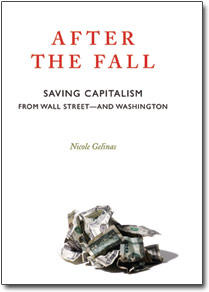
3.1.11

28.12.10

27.12.10
Aquina; A Beginner's Guide -Edward Feser

26.12.10
Foundations of Thomistic Philosophy - A.G. Sertillanges, O.P.

-About the Author (wikipedia)
"Outside God and ourselves, an idea is a thing, while a thing, in us and in God, is an idea. At this stage, this will serve as a reasonably accurate resume of Thomism"

Guide to Thomas Aquinas - Josef Pieper

-About the Author (Ignatius Insight)
-About the Author (Wikipedia)
-Author's Obituary (First Things)
Aquinas Wikipedia page.
"The intellectual dynamics of the early thirteenth century was...determined chiefly by two forces, both revolutionary and both of tremendous vitality: on the one hand the radical evangelism of the voluntary poverty movement, which rediscovered the Bible and made it the guide to Christian doctrine and Christian life; and on the other hand the no less fierce urge to investigate, on the plane of pure natural philosophy, the reality that lay before men's eyes. This latter movement in the direction of a hitherto unknown and novel "worldliness" found ammunition in the complete works of Aristotle, which were at that time just beginning to be discovered.
Both movements contained within themselves sufficient explosive force to shatter the whole structure of medieval Christianity's intellectual order. Both appeared in extremist form - theologically speaking, in the form of heresies. The remarkable thing about St. Thomas, who was exposed to these two intellectual currents while he was still a student at Naples, is that he recognized and accepted the rightness of both approaches; that he identifies himself with both; that he affirmed both, although they seemed mutually opposed to one another; and that he attempted to incorporate both in his own spiritual and intellectual life. The paradigmatic, the exemplary quality of St.Thomas is, as we have said, contained precisely in his refusal to "choose" between the two extreme possibilities. Instead he "chose" both - and did so not by merely tacking one onto the other in a mechanical fashion, but by grasping and demonstrating their inherent compatibility; in fact, by showing the necessity for fusing these apparently contradictory and mutually exclusive approaches to the world."
( 30)
Subscribe to:
Posts (Atom)


 Posts
Posts

